

Platin-DRP®
Platin-DRP® uses tumor biology to strengthen standard regimens and enable more effective treatment strategies for patients.
Platinum therapy does not help all patients the same way.
Platinum-based therapies such as cisplatin and carboplatin remain cornerstone treatments for lung and breast cancer treatment, yet patient responses vary widely. Approximately 30% of patients have low sensitivity to platinum therapy, ~40% show intermediate response, and ~30% are highly sensitive.
Despite these biological differences, treatment decisions are often made without knowing which group a patient belongs to. As a result, many patients experience significant side effects with limited clinical benefit and lost time before more effective alternatives are found.
Let’s consider the global population in lung & breast cancer
Data source Globocan 2022 (version 1.1) - 08.02.2024
Platin-DRP®: a biomarker guiding platinum treatment decisions
Platin-DRP® is a 205-gene, mRNA-based tool that estimates a patient’s likelihood of benefiting from cisplatin or carboplatin. By identifying where a patient may fall within the spectrum of platinum sensitivity, it supports a more precise use of standard platinum regimens, improves response rates and helps reduce unnecessary exposure in patients unlikely to benefit.
From tumor biology to patient benefit — How platin-DRP® works
1.
Biopsy

Platin-DRP® is performed using the already available FFPE tumor biopsy collected during routine pathology. No additional procedure is required, making the process non-invasive and fully integrated into existing clinical workflows. From biopsy to result, the turnaround time is approximately 72 hours.
2.
Analyse
Platin-DRP® applies a multigene, mRNA-based algorithm to evaluate the tumor’s gene expression across 205 licensed genes associated with cisplatin and carboplatin sensitivity and resistance. The output is a continuous score from 0 to 100, where higher scores indicate a greater predicted likelihood of benefit from platinum therapy. Likewise, lower scores suggest reduced sensitivity to platin.

3.
Support
The individualized Platin-DRP® score is provided to the oncologist to support treatment planning. Patients with higher scores may be considered appropriate candidates for platinum-based standard regimens, while those with lower scores may benefit from consideration of alternative standard treatment options. By aligning treatment with tumor biology, Platin-DRP® supports more personalized and effective care decisions.

Increased pCR rate expected with Platin-DRP®
In platinum-containing regimens, treatment response is strongly influenced by platinum sensitivity. Using the Platin-DRP®, patients can be selected based on their likelihood to respond positively to platin-treatment. Patients included in the graph represent those with varying Platin-DRP® scores.
By excluding those not sensitive to platin treatment, we spare them from the avoidable side effects of platinum chemotherapy, allowing them to move on to more effective treatments. By enriching for patients more likely to respond, Platin-DRP® has the potential to increase response rates within existing platinum-based combinations and doublets.
Across 5 studies, the Platin-DRP® has consistently demonstrated its ability to identify which patients are most likely to benefit from platinum treatment and which are not. Find a link below to our research, including our latest abstract and poster presented at ESMO.

Expected disease-specific survival based on a multivariable model in the ACV cohort of JBR.10. Curves shown for expected disease-specific survival based on the multivariate time-dependent model from JBR.10 with values of the combined profiles (DRP®) of 10, 25, 50, 75 and 90 for a model including gender male, age 62 years, histology adenocarcinoma and stage 2
Posters presented at major conferences
-
![]()
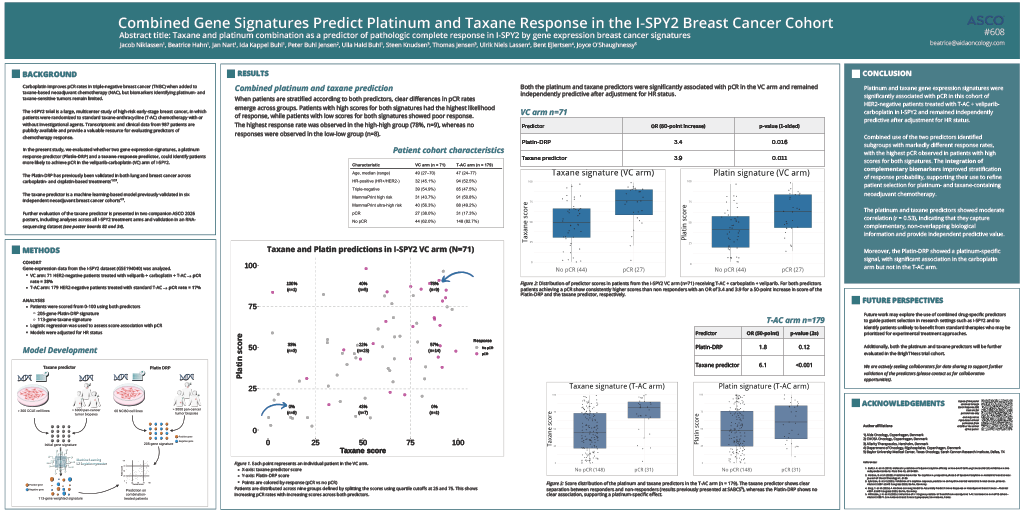
Demonstrates the predictive value of a taxane mRNA response score across multiple I-SPY2 breast cancer treatment arms. The biomarker enables more precise patient stratification and supports personalized therapy selection. Presented at ASCO 2026.
-
![]()
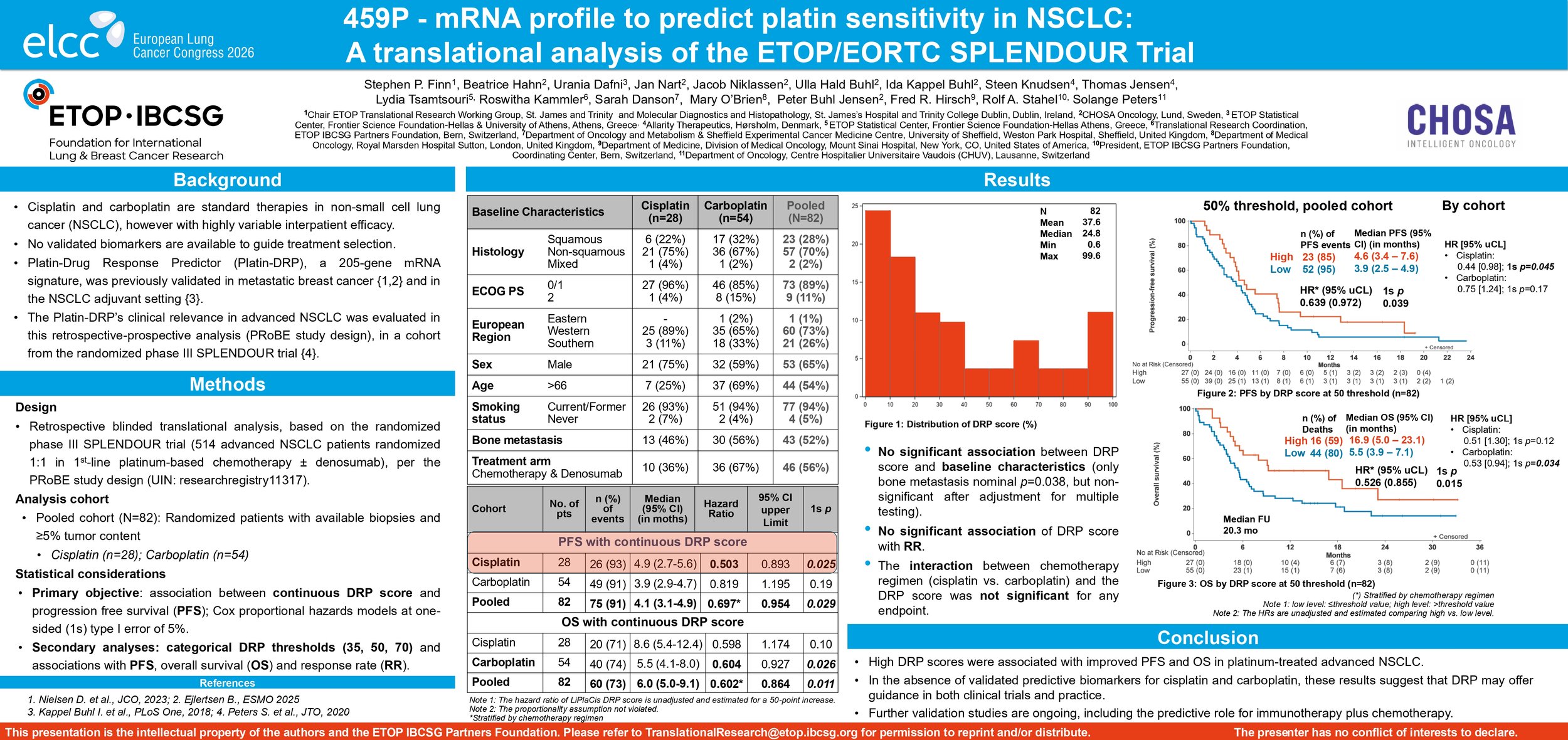
Assesses an mRNA-based profile for predicting platinum sensitivity in NSCLC in the ETOP/EORTC SPLENDOUR trial. The findings support Platin-DRP® as a tool for identifying patients most likely to benefit from platinum therapy. Presented at ELCC 2026.
-
![]()
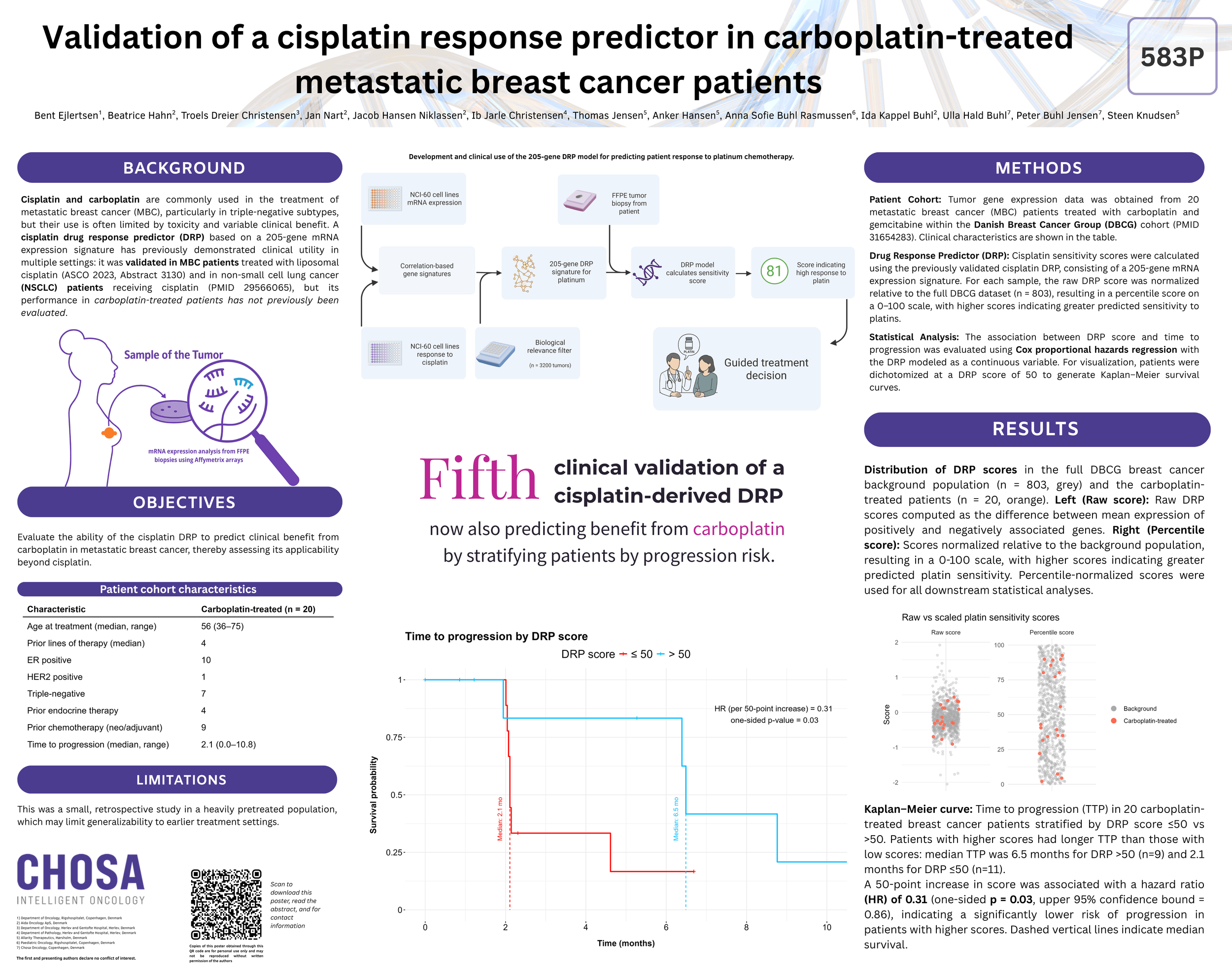
Assesses a cisplatin mRNA Drug Response Predictor (DRP®) in metastatic breast cancer. The study supports DRP® as a predictive biomarker for identifying patients most likely to benefit from platinum-based chemotherapy. Presented at ESMO 2025.
Platinum-based therapies have been a cornerstone of cancer treatment for more than 70 years.
Explore how cisplatin and carboplatin enhance PD-(L)1 treatments and why this combination continues to shape modern cancer care. Understanding this synergy is key to optimizing patient outcomes. Better alignment between tumor biology and therapy could enhance results.
Did you know that CHOSA’s Platin-DRP® is in-licensed from Allarity Therapeutics?
CHOSA has the exclusive global rights to the Drug Response Precistor, now known as the Platin-DRP®. Explore the evolution of the Platin-DRP® along with the history of how linking drug sensitivity to tumor biology lead to the DRP®.
Want more information?
Here is an explainer video courtesy of Allarity Therapeutics